Tomb raiding is a skill, a technique for destruction. When ancient nobles built their tombs, they certainly went to great lengths to prevent theft. As a result, they employed all sorts of measures, setting up various traps and hidden weapons within the tombs. These included massive stones, quicksand, poisoned arrows, venomous creatures, and countless other dangers.
By the Ming Dynasty, influenced by Western technological marvels, some grand tombs even incorporated Western mechanisms like the “Eight Treasures Turning Heart” trap. This was especially true for the imperial tombs of the Qing Dynasty, which can be considered masterpieces that combined thousands of years of anti-theft technology. The warlord Sun Dianying attempted to excavate the Eastern Tombs, intending to use the treasures inside to fund his army. He mobilized a large force and, after five or six days of digging and blasting, finally succeeded, highlighting the tomb’s formidable construction.
For tomb raiders, the challenge lies in finding ways to decipher these mechanisms and gain access to the tombs in search of treasure.
However, in modern times, finding ancient tombs is often more challenging than actually excavating them. Most of the large tombs with obvious structures like earth mounds and stone tablets have already been excavated. To locate those that have been buried underground for centuries without any surface markers, one needs specific skills and special tools. This has led to the development of various instruments such as iron probes, Luoyang shovels, bamboo stakes, ground-drilling machines, probing claws, and black folding tools.

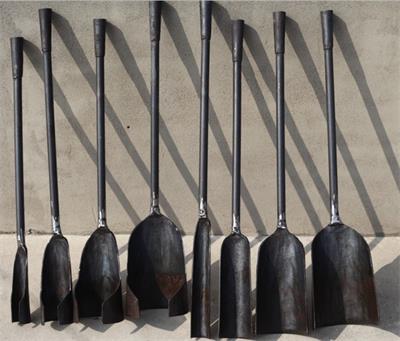
Luoyang Shovels
Some experts do not rely on tools at all; instead, they search for clues in ancient texts to locate tombs. A rare few possess secret techniques that allow them to interpret the patterns of mountains and rivers, using their feng shui skills to find burial sites. I belong to the latter one. I have traveled extensively, encountering many bizarre and extraordinary events along the way. If I were to recount each one, it would be enough to astonish listeners and leave them speechless.
These various events must begin with a tattered book left by my grandfather, titled “The Secret Art of Yin-Yang Feng Shui in Sixteen Characters.” This book is incomplete; the lower half has been inexplicably torn away, leaving only the first volume, which focuses on Feng Shui techniques. Most of the content discusses unique methods for interpreting the Feng Shui patterns of tombs and burial sites…